Dewatered sludge cake is one of the most difficult materials a treatment plant moves. It’s sticky, variable in consistency, abrasive when grit is present, and unforgiving of equipment that wasn’t designed for it. The two most common transport options — belt conveyors and screw conveyors — behave very differently with this material, and choosing between them affects maintenance budgets for the life of the system.
How Screw Conveyors Handle Cake
Screw conveyors move cake by pushing it along a trough with a rotating auger. They’re fully enclosed, which helps with odor, and they work well over short, straight runs. But the mechanics work against sticky cake: material shears against the flighting and trough continuously, which consumes drive energy, generates wear on contact surfaces, and can smear cake rather than convey it when solids content drops. Shaftless designs reduce plugging but increase trough liner wear, and liner replacement is a recurring cost item.
How Belt Conveyors Handle Cake
Belt systems carry the material rather than pushing it, so the cake rides the belt without continuous shearing. That translates into lower power draw per ton, less material degradation, and wear parts that are cheaper and simpler to replace. Belt conveyors also handle variable cake consistency more gracefully — a wet batch that would smear in a screw simply rides the belt.
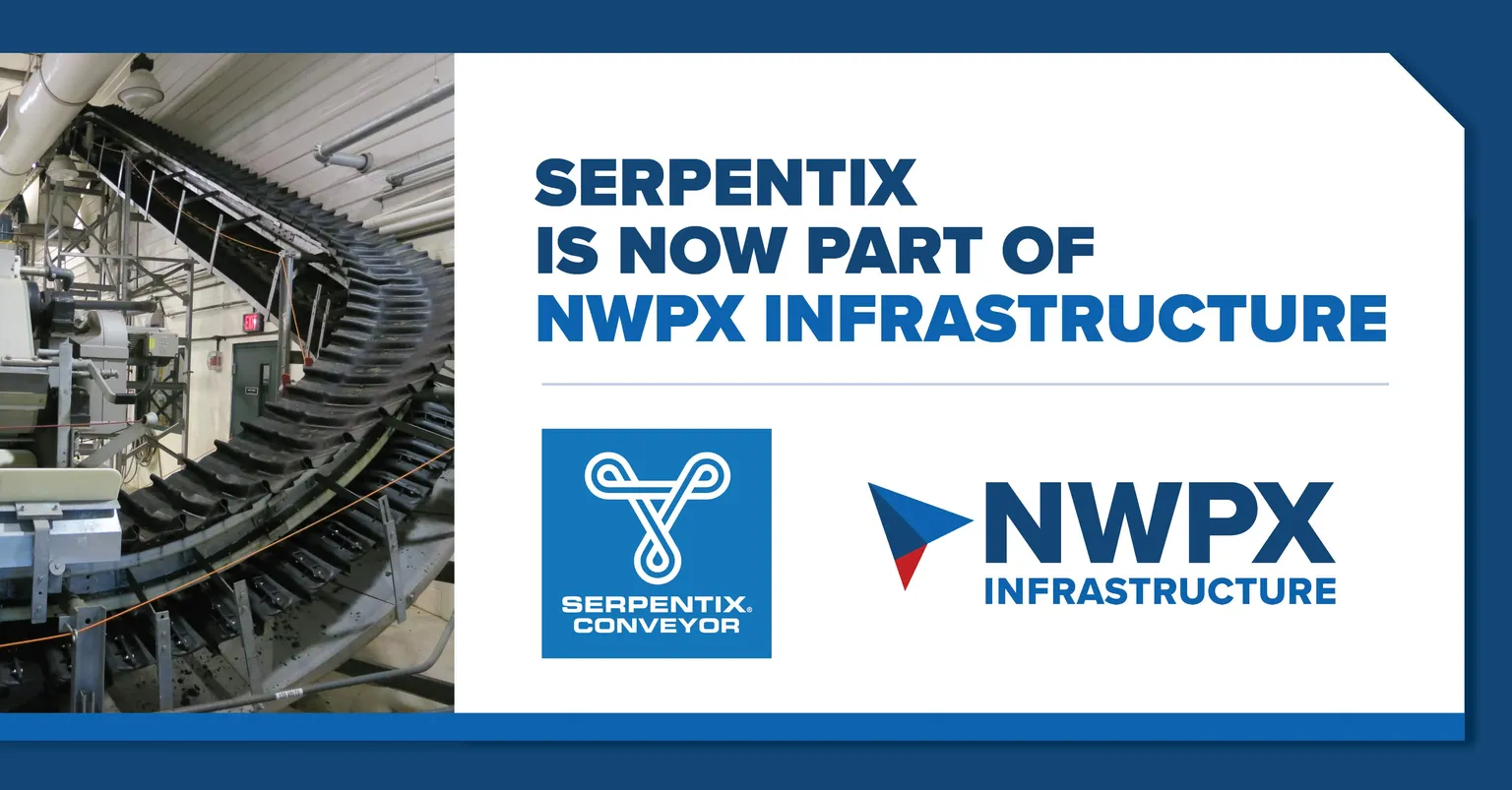
The traditional argument against belts in sludge service was footprint: straight-line belt runs need space treatment plants often don’t have. That’s exactly the problem the Pathwinder conveyor was engineered to solve — it follows a serpentine path around obstructions, climbs inclines up to 45 degrees, and navigates a 6-foot radius, delivering belt-conveyor economics in spaces that were previously screw-conveyor territory.
Where Each One Wins
- Short, straight, fully enclosed runs with consistent cake: screw conveyors remain a workable choice
- Longer runs, elevation changes, routing around existing equipment: belt systems, particularly path-following designs
- High-throughput, continuous-duty service: the Model-H conveyor is built for sustained heavy-duty performance where uptime is non-negotiable
- Loading trucks or distributing cake across storage: a Flight Distribution conveyor delivers uniform distribution along the full length of the receiving vehicle
Total Cost of Ownership Is the Real Comparison
Purchase price rarely decides this correctly. Compare energy per ton conveyed, wear-part cost and replacement frequency, washdown time, and what a failure does to plant operations. Facilities that run this comparison over a 10-year horizon typically find the carrying-vs-pushing distinction shows up directly in the maintenance line.
If you’re weighing options for a cake handling project, Serpentix offers a free engineering review — send us your layout and material data and our engineers will work through the comparison with your actual numbers.