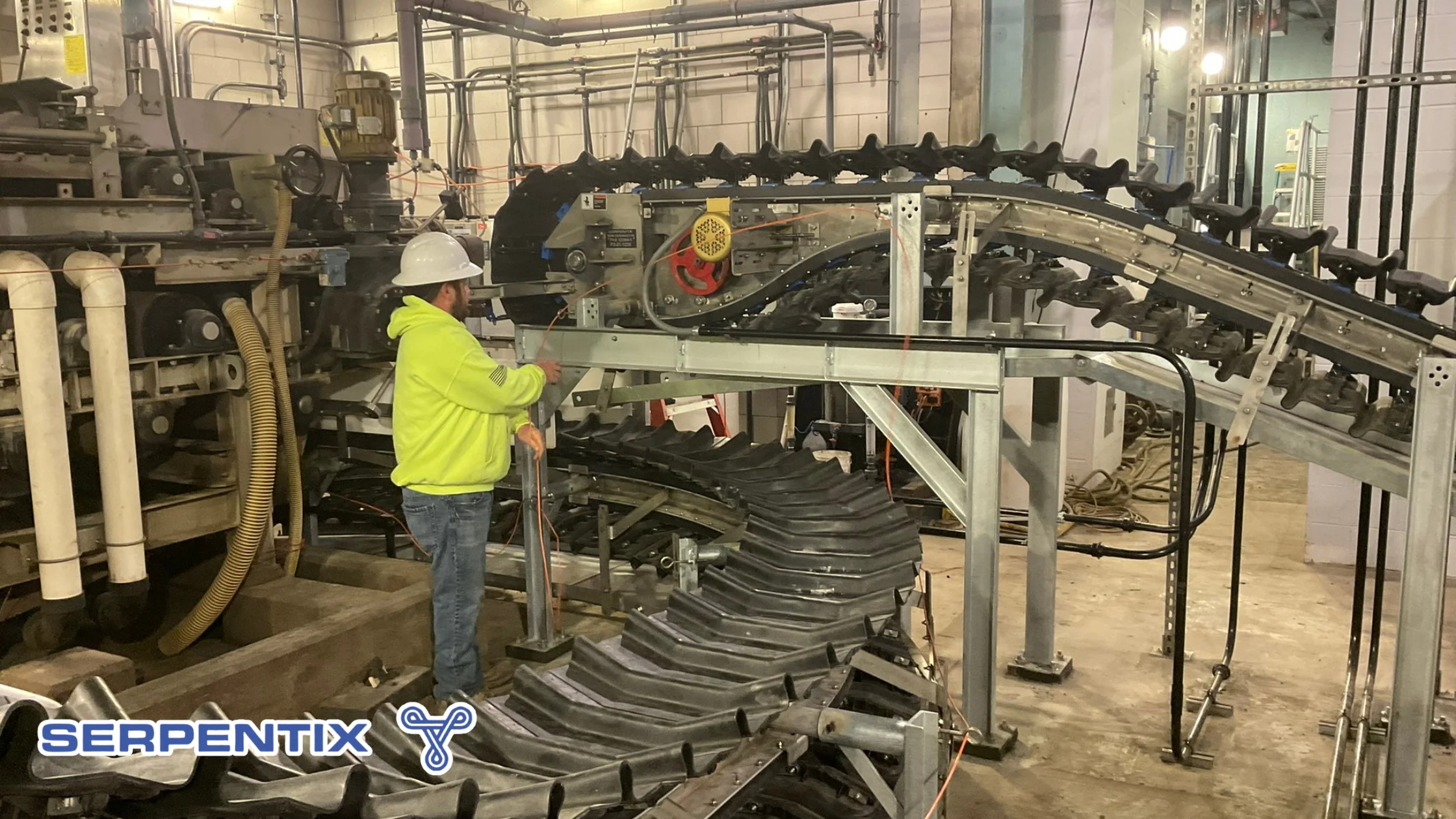
Continuous Path™ conveying represents a breakthrough in material handling technology that transforms how facilities with limited floor space approach utilization and operational efficiency. This innovative conveyor type eliminates traditional transfer points while enabling smooth material flow through complex routing configurations, including tight curves and steep inclines. Unlike traditional types of conveyor systems such as belt conveyor, chain conveyor, or roller conveyors that require multiple segments, this technology creates a continuous material flow path.
By understanding the principles and applications of continuous path conveyors, businesses can achieve significant improvements in throughput, reduce maintenance requirements, and maximize their return on investment in material handling solutions.
Understanding Continuous Path™ Conveyor System Technology
Continuous path conveyors utilize advanced belt and roller conveyors technology combined with innovative drive configurations that maintain product stability throughout complex routing paths. Unlike traditional conveyor systems that conveyors use multiple segments connected by transfer points, this conveyor type enables seamless movement through curves, inclines, and elevation changes within a single continuous conveyor belt system. While conventional belt conveyors are among the most common types of conveyor systems, they typically follow a fixed path design that limits routing flexibility.
The world of conveyors includes various solutions such as roller, chain conveyor systems, overhead conveyors, and bucket conveyor designs, but Continuous Path™ technology represents a significant advancement. Traditional gravity roller conveyors use a series of rollers to move products horizontally, while vertical conveyors handle elevation changes. However, these conveyor lines require multiple connection points that create potential failure locations.
Key features of Continuous Path™ technology include:
- Flexible belt materials that maintain tension while navigating tight radius curves and steep angles
- Integrated support structures that provide consistent product stability throughout complex routing
- Single-drive systems that eliminate multiple motor requirements and reduce energy consumption
- Patented tensioning mechanisms that automatically adjust to varying load conditions
The result is a compact, efficient solution that maximizes facility space utilization while minimizing potential failure points according to Conveyor Equipment Manufacturers Association standards for advanced conveyor technologies. This design ensures that the conveyor operates reliably while offering superior material handling solutions compared to traditional conveyor layout configurations.
Ready to explore how Continuous Path™ technology can transform your operations? Contact our engineering team to discuss your specific routing challenges and discover innovative solutions for your facility.
Key Applications and Industries for Different Types of Conveyor Systems
Manufacturing facilities benefit significantly from continuous path conveyors when dealing with limited floor space and complex product routing requirements. The technology serves diverse industrial applications with proven results across various industries as documented by the Material Handling Institute. Unlike traditional slat conveyors or troughed belt conveyor systems that conveyors are designed for specific applications, Continuous Path™ technology adapts to multiple operational needs.
Manufacturing Applications:
- Automotive assembly lines for multi-level component transport where conveyors are often used to move product between workstations
- Electronics production requiring gentle handling of sensitive components along the conveyor path
- Food processing facilities needing sanitary systems that conveyors can be used for bulk material transport
- Pharmaceutical operations demanding contamination-free material handling where conveyors are particularly critical
Warehousing and Distribution:
- E-commerce fulfillment centers with compact sorting requirements where conveyors offer superior flow of goods
- Distribution facilities maximizing storage density using integrated storage systems
- Cross-docking operations requiring rapid product flow where conveyors are ideal for continuous operation
- Cold storage facilities where space efficiency is critical and conveyors move products efficiently
Traditional conveyor systems such as overhead conveyors, continuous bucket conveyors, or magnetic conveyors each serve specific material handling requirements. However, the continuous conveyor design eliminates bottlenecks created by transfer point accumulation and reduces the overall system footprint across all these applications. This approach ensures optimal material flow while accommodating the right conveyor solution for each unique operational challenge.
How Belt Conveyor Systems Reduce Transfer-Point Complexity and Improve Efficiency
Traditional conveyor systems require multiple transfer points to change direction or elevation, creating potential jam points and maintenance concerns. While belt and roller conveyors are known for reliability, conventional designs that conveyors use multiple connection points create complexity. Continuous Path™ technology eliminates up to 80% of these transfer points, delivering measurable operational improvements that align with Occupational Safety and Health Administration guidelines for conveyor safety.
Unlike systems where conveyors come in separate segments requiring complex connections, this integrated approach ensures continuous vertical and horizontal transport. Traditional troughed belt designs and gravity roller systems that roller conveyors use require careful coordination at each connection point. The simple design of Continuous Path™ eliminates these challenges while maintaining the flow of goods throughout the entire system.
Reliability Improvements:
- Reduced system complexity with fewer moving parts along the conveyor path
- Decreased maintenance requirements and associated labor costs
- Lower risk of product damage during transitions at the end of the conveyor sections
- Improved overall system availability and uptime where conveyors are also more dependable
Operational Benefits:
- Consistent product velocity throughout the entire belt loop system
- Reduced acceleration and deceleration cycles that conveyors are often subject to
- Smoother product flow for fragile components and heavy loads
- Eliminated bottlenecks at traditional transfer locations where conveyors are used in series
Each eliminated transfer point represents fewer maintenance requirements and decreased risk of operational disruptions. This design approach surpasses what companies like mk north america typically offer with conventional segmented systems.
Interested in reducing maintenance costs and improving system reliability? Request a detailed quote to learn how transfer-point reduction can benefit your specific application.
Space Optimization Through Compact Conveying System Design
Tight layout conveyors excel in facilities with limited floor space where floor space commands premium value. The ability to route products through three-dimensional paths allows designers to utilize vertical space effectively while maintaining ground-level access for maintenance and operations. Unlike traditional systems where conveyors can be configured only in straight lines or simple curves, this technology enables complex routing that conveyors are designed to handle seamlessly.
Space Utilization Advantages:
- Three-dimensional routing capabilities that maximize vertical space usage where conveyors play a critical role
- Minimal footprint requirements compared to traditional straight-line systems that often used in assembly lines
- Flexible installation around existing structures and obstacles using design features that adapt to constraints
- Retrofit compatibility with existing facility layouts where conveyors are also integrated with current equipment
Design Flexibility Benefits:
- Snake-like routing through complex facility configurations that conveyors can be used to navigate efficiently
- Integration with existing equipment without major building modifications using modular design and manufacture approaches
- Preservation of current infrastructure investments while enhancing material handling solutions
- Adaptability to future layout changes and expansions where conveyors come in reconfigurable modules
Manufacturing plants can install production lines in significantly smaller footprints compared to traditional straight-line conveyor configurations, supporting modern lean manufacturing principles promoted by the International Organization for Standardization. This efficiency enables facilities to maximize their available space while maintaining the specific material handling requirements for their operations.
Advanced Roller and Chain Conveyor Incline Capabilities to Move Product Efficiently
The incline conveyors within Continuous Path™ systems handle elevation changes up to 30 degrees without requiring additional grip mechanisms or product containment features. This capability eliminates the need for separate lifting devices or complex multi-tier conveyor arrangements that traditional types of conveyor systems require. Unlike conventional vertical conveyors or bucket conveyor systems that conveyors are used for elevation changes, this integrated approach maintains continuous material flow throughout elevation transitions.
Elevation Change Features:
- Up to 30-degree incline capability without additional equipment that conveyors are also typically equipped with
- Stable product positioning during transitions along the conveyor path
- Consistent speed and tracking throughout elevation changes where conveyors move products reliably
- Predictable timing for downstream process coordination that conveyor systems provide
Vertical Transport Benefits:
- Minimal horizontal space requirements for elevation changes in facilities with limited floor area
- Multi-story facility integration capabilities that conveyors offer for complex routing
- Obstacle clearance without complex routing that traditional series of rollers configurations require
- Reduced infrastructure costs compared to separate lift systems or continuous vertical conveyors
Products maintain stable positioning during incline transitions, reducing the risk of shifting or damage that can occur with traditional inclined belt systems. This design approach ensures that heavy loads and delicate materials receive consistent handling throughout the entire conveyor layout, regardless of elevation changes. The system maintains the same reliable performance that belt conveyors can be used for in horizontal applications.
Need help designing a multi-level conveyor solution? Find your local representative to discuss incline conveyor options and receive expert guidance on your specific elevation change requirements.
ROI Analysis and Cost Benefits: Choosing the Right Conveyor for Material Handling
Implementation of continuous path conveyors typically generates return on investment through multiple channels, delivering both immediate and long-term financial benefits. Analysis methods follow guidelines established by the International Material Management Society for material handling system evaluation. Unlike traditional pallet handling systems or bulk material conveyors that conveyors are often complex and expensive to maintain, this integrated approach reduces operational costs significantly.
Maintenance Cost Reductions:
- 40% reduction in maintenance labor requirements compared to systems where conveyors come in multiple segments
- Lower spare parts inventory costs for facilities that conveyors are used extensively
- Reduced planned maintenance windows along the conveyor system
- Fewer system failure points requiring attention at the end of the conveyor sections
Energy Efficiency Improvements:
- Single drive system versus multiple conveyor drives that roller conveyors use in traditional installations
- Reduced total power consumption across conveyor lines
- Lower ongoing operational costs where conveyors are particularly energy-intensive
- Support for corporate sustainability initiatives through efficient design and manufacture
Space Utilization Value:
- 20-30% improvements in facility space efficiency in facilities with limited floor areas
- Increased production capacity without building expansion where conveyors play a space-critical role
- Higher storage density capabilities integrated with storage systems
- Avoided construction costs in high-rent industrial areas where conveyors are ideal for maximizing space
The elimination of transfer points and integration of routing capabilities create substantial cost savings across multiple operational areas while supporting Environmental Protection Agency energy efficiency programs. This comprehensive approach to material handling solutions ensures optimal return on investment compared to traditional conveyor type selections.
Design Considerations and Engineering for Belt and Overhead Conveyor Systems That Convey Heavy Loads
Proper implementation of continuous path conveyors requires careful analysis of product characteristics, routing requirements, and environmental conditions. Professional engineering ensures optimal system performance and longevity following industry standards established by ASME International. Unlike conventional approaches where conveyors can be configured using standard components, this advanced conveyor type demands specialized engineering that conveyors are designed to handle unique routing challenges.
Critical Design Factors:
- Product weight, dimensions, and surface characteristics that determine the right conveyor selection
- Environmental conditions including temperature and contamination levels where conveyors are used across various industries
- Required throughput rates and operational schedules that conveyors are known to impact significantly
- Integration requirements with existing pallet handling and bulk material systems
Engineering Analysis Requirements:
- Belt selection for flexibility and strength requirements that ensure that the conveyor operates reliably horizontally and vertically
- Proper tension distribution throughout complex routing that conveyors are also subject to during operation
- Motor sizing and drive placement optimization using advanced design features
- Support structure design for varying load conditions that conveyors move throughout their operational life
Load calculations for continuous conveyor systems differ from traditional straight-line applications due to the additional forces created by directional changes and elevation transitions. The engineering process must account for how products flow along the conveyor path and ensure optimal material flow under all operating conditions. This comprehensive analysis ensures that the final system design and manufacture meets all specific material handling requirements while providing the performance reliability that facilities with limited floor space demand.
Let our experienced engineers optimize your system design. Submit your project drawings for professional analysis and recommendations tailored to your specific application requirements.
Installation and Commissioning: How Magnetic Conveyor and Bucket Conveyor Systems Enhance Material Handling
Successful installation of tight layout conveyors requires precise alignment and tensioning to achieve optimal performance. The continuous belt configuration demands higher installation accuracy compared to segmented systems, following protocols established by the Institute of Industrial and Systems Engineers. Unlike traditional installations where conveyors come as separate modules, this integrated system requires specialized expertise to ensure that the conveyor operates as a unified material handling solution.
Installation Requirements:
- Precise alignment using laser measurement tools that ensure the belt loop maintains proper tracking
- Professional tensioning with specialized equipment designed for continuous conveyor systems
- Proper system geometry throughout complex routing where conveyors are configured for optimal performance
- Quality control verification at each installation phase to ensure that the conveyor meets design specifications
Commissioning Procedures:
- Empty system operation testing across the entire conveyor path
- Gradual load introduction and performance verification that conveyors are used for in operational settings
- Full capacity testing under operational conditions with various products and heavy loads
- Documentation of performance parameters and adjustments that conveyors are particularly sensitive to during initial operation
This thorough commissioning process identifies and resolves any issues before full production implementation, ensuring reliable long-term operation that meets National Institute of Standards and Technology performance standards. The process verifies that material flow remains consistent throughout the system and that all design features function as intended across various industries and applications. Professional installation ensures that the system provides the material handling solutions that facilities with limited floor space require for optimal operational efficiency.
Transform your material handling operations with Continuous Path™ conveying technology. Request a comprehensive quote to discover how these innovative systems can optimize your facility layout and improve operational efficiency. Our engineering team is ready to consult on your specific project requirements and develop customized solutions that maximize your return on investment. Contact your local representative to schedule a consultation and explore how continuous path conveyors can revolutionize your material handling operations.