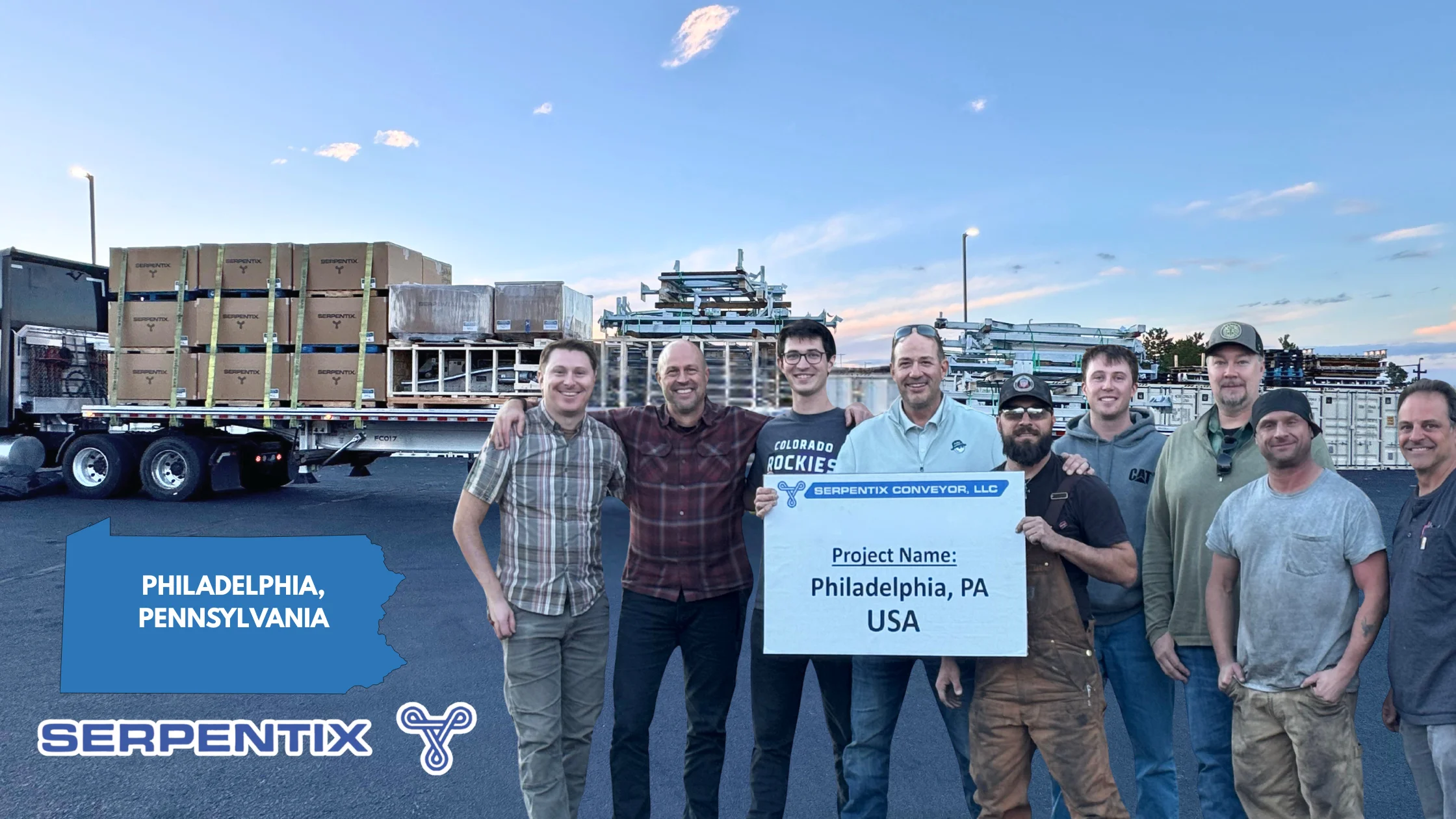
In large metropolitan wastewater treatment facilities, handling screenings from multiple bar screens presents unique logistical challenges. Philadelphia’s innovative approach – implementing two Pathwinder conveyors with Flex-End discharge systems in a vertically stacked configuration – demonstrates how creative engineering can maximize space utilization while maintaining operational efficiency. This case study examines the technical considerations and long-term planning that went into this unique installation.
The Challenge: Multiple Collection Points, Limited Discharge Space
Major municipalities process millions of gallons of wastewater daily, requiring multiple bar screens to remove debris before treatment. Philadelphia’s facility faced several concurrent challenges:
- Multiple bar screen locations requiring screenings collection
- Limited space for discharge equipment and dumpster placement
- Need for operational flexibility during maintenance periods
- Stringent environmental requirements for screenings handling
Traditional solutions might involve multiple conveyors with separate discharge points, consuming valuable facility space and complicating operations. Philadelphia’s engineering team, working with Serpentix engineers, developed an innovative dual-conveyor approach that addresses these challenges while providing long-term operational benefits.
The Solution: Vertically Integrated Dual Conveyors
The implemented design features two Pathwinder conveyors with Flex-End discharge systems:
- Primary conveyor: 229 feet in length
- Secondary conveyor: 249 feet in length
- Both systems discharge into the same dumpster location
- Vertical stacking maximizes ground footprint efficiency
This configuration represents a significant engineering achievement, requiring precise coordination of:
Material Flow Paths: The engineering drawings detail complex routing with multiple elevation views (A-A, B-B, C-C) showing how each conveyor collects screenings from specific bar screens. Conveyor SBC-4 and SBC-5 are precisely routed to minimize interference while maximizing collection efficiency from distributed screening locations throughout the facility.
Structural Integration: The drawings reveal extensive structural calculations supporting two major conveyors in the stacked configuration. Key specifications include:
- Splice track supports with 4-hole and 8-hole base plates ranging from 8″x8″ to 8¾”x10″ with varying thicknesses
- Typical skirting cross-sections preventing material spillage
- Drip pan details managing moisture from wet screenings
- Cover support cross-sections ensuring weather protection throughout the system
Discharge Coordination: The Flex-End discharge systems, clearly detailed in Sections E-E, F-F, and pneumatic schematics, feature:
- Pneumatic cylinder actuators (part specifications detailed in moving parts schedules)
- Flexible positioning mechanisms allowing operators to direct discharge precisely
- Clearance calculations ensuring the upper conveyor (FF ELEV: 114.00′) clears the lower system’s trajectory
- Intermediate support systems managing utilities and control connections during movement
Engineering for Large Municipal Applications
The scale of Philadelphia’s system – with combined conveyor lengths approaching 500 feet – showcases the capability of enclosed conveyor technology in major municipal applications. The engineering drawings (sheets 1-9, project P2-22-1246) reveal meticulous attention to detail with comprehensive parts schedules and specifications.
Modular Track Design: Both conveyors utilize modular track sections detailed in the drawings, with specific call-outs for:
- Splice plate assemblies (4-hole configurations) ensuring smooth material flow across joints
- Moving parts schedules detailing chain assemblies, belting configurations, and wear components
- Track alignment angles precisely calculated for optimal material movement
- Support spacing determined by structural loading calculations
Component Specifications: The parts lists detail extensive component requirements:
- Weather seal assemblies (SBC-5) protecting drive mechanisms from environmental exposure
- Drip pan configurations managing moisture from wet screenings material
- Chain strand assemblies with master link provisions for maintenance
- Cover bands, guide blocks, and splice internal attachments ensuring reliable operation
Flex-End Technology: The Flex-End discharge mechanism drawings provide critical operational details:
- Pneumatic operator schematics showing control logic for positioning
- Flexible conduit routing (Greenfield type) accommodating movement ranges
- Support point calculations managing dynamic loads during operation
- Clearance specifications ensuring no interference between upper and lower discharge paths
Timeline Considerations in Major Municipal Projects
The Philadelphia project exemplifies the extended timelines common in large municipal infrastructure upgrades. With engineering originally completed in 2021 and drawings updated through multiple revisions (as evidenced by the November 2023 dates on the general arrangement drawings), the multi-year project timeline reflects:
- Complex procurement processes required for major capital expenditures
- Coordination with ongoing facility operations during active wastewater treatment
- Integration with related infrastructure improvements throughout the facility
- Multiple drawing revisions accommodating field conditions and operational requirements
- Regulatory review and approval requirements for environmental compliance
The engineering documentation shows systematic progression through approvals, with drawings marked “FOR SEISMIC APPROVAL 11/07/2023” indicating the thorough review process required for critical infrastructure. This extended timeline underscores the importance of forward-thinking design. The Environmental Protection Agency (EPA) notes that major wastewater infrastructure projects typically span 3-7 years from conception to commissioning. Engineers must anticipate future regulatory changes, capacity requirements, and technology developments when designing systems intended for decades of service.
Technical Innovation: Stacked Conveyor Configuration
The vertical stacking of two major conveyor systems represents innovative engineering solving real-world space constraints. The detailed engineering drawings reveal the complexity of this installation, with conveyor centerlines SBC-4 and SBC-5 precisely positioned to maximize space utilization while maintaining operational accessibility.
Structural Loading and Support Systems: The drawings specify robust support structures capable of handling:
- Dead loads from both conveyor systems utilizing 304 stainless steel construction throughout
- Live loads from wet screenings material being conveyed
- Dynamic forces managed through pneumatic actuator systems for the Flex-End discharge mechanisms
- Maintenance platforms with detailed handrail specifications meeting safety requirements
Precise Component Integration: The engineering documents detail:
- Helical curve sections managing elevation changes and directional transitions
- Weather seal assemblies protecting critical drive components
- Splice track supports positioned at calculated intervals for optimal load distribution
- Cross brace configurations providing lateral stability for the elevated structures
Flex-End Technology Implementation: The drawings showcase the sophisticated Flex-End discharge systems with:
- Pneumatic actuator controls allowing precise positioning over dumpsters
- Flexible conduit routing accommodating movement without damage
- Support connections designed for both static and dynamic loading conditions
- Intermediate eye-bolt supports managing cable and utility runs
Ready to optimize your facility’s screening handling system? Request a consultation to explore innovative conveyor configurations tailored to your space constraints.
Operational Benefits of the Dual-System Approach
Philadelphia’s dual-conveyor system provides several operational advantages over traditional designs:
Redundancy: With two independent systems, maintenance can be performed on one conveyor while the other maintains partial screening handling capacity.
Flexibility: Different bar screens can be routed to either conveyor, allowing operators to balance loads or isolate specific screening sources.
Efficiency: Consolidated discharge reduces dumpster handling equipment requirements and simplifies waste hauling logistics.
Future Adaptability: The modular design allows for future modifications as facility needs evolve or screening volumes change.
Material Handling Considerations for Screenings
Screenings present unique material handling challenges compared to other wastewater residuals:
Variable Composition: Screenings contain diverse materials from organic matter to plastics, requiring robust conveyor designs capable of handling varying densities and potential jamming hazards.
Moisture Content: Unlike dewatered sludge, screenings retain significant free water, necessitating enclosed conveyor designs preventing leakage along the entire path.
Odor Control: The Conveyor Equipment Manufacturers Association (CEMA) emphasizes enclosed designs for screenings applications, minimizing odor release within treatment facilities.
Compaction Characteristics: Screenings can compact under their own weight during transport, requiring adequate chain pull calculations and proper flight spacing to maintain material movement.
Design Features for Long-Term Reliability
The engineering drawings reveal numerous details focused on long-term reliability:
Wear Components: Strategic placement of replaceable wear liners in high-abrasion areas extends equipment life while minimizing maintenance costs.
Access Provisions: Inspection doors, maintenance platforms, and service points are positioned for safe, efficient access without requiring system shutdown.
Drive Redundancy: Each conveyor includes comprehensive drive component specifications, with service factors ensuring adequate capacity even as components wear.
Instrumentation: Provisions for monitoring equipment include speed sensors, bearing temperature monitors, and chain tension indicators, enabling predictive maintenance approaches.
Integration with Facility Master Planning
Large municipalities typically develop 20-30 year master plans for wastewater infrastructure. Philadelphia’s dual-conveyor system aligns with master planning principles by:
- Providing capacity for projected population growth
- Allowing for future bar screen additions
- Maintaining flexibility for process modifications
- Supporting sustainability goals through efficient operations
The modular nature of the Pathwinder system particularly supports master planning objectives, as future capacity increases can be accommodated through drive upgrades or flight modifications rather than complete system replacement.
Developing a long-term screening handling strategy? Connect with our engineering team to explore how flexible conveyor designs support your facility’s master plan.
Construction Sequencing for Operational Continuity
Installing major conveyor systems in operating treatment plants requires careful construction sequencing. Philadelphia’s project likely involved:
Phased Installation: Constructing support structures and conveyor sections in sequences minimizing disruption to existing operations.
Temporary Screening Handling: Providing alternative screening collection during tie-in periods when existing systems are modified.
Off-Hours Work: Scheduling critical connections during low-flow periods, typically overnight or weekends.
Rapid Commissioning: Following the model demonstrated in Sarnia, utilizing factory support for efficient startup and testing.
Comparative Analysis: Traditional vs. Innovative Approaches
Philadelphia’s stacked dual-conveyor configuration offers distinct advantages over traditional alternatives:
Space Efficiency: Compared to side-by-side installations, the vertical configuration reduces ground footprint by approximately 50%, preserving valuable facility space for other uses.
Capital Efficiency: Shared structural supports and consolidated discharge areas reduce infrastructure costs compared to completely separate systems.
Operational Efficiency: Centralized discharge simplifies waste handling logistics and reduces equipment requirements for dumpster manipulation.
Maintenance Efficiency: Grouped equipment simplifies spare parts inventory and consolidates maintenance expertise requirements.
Future Applications and Industry Trends
Philadelphia’s innovative approach points toward emerging trends in wastewater infrastructure:
Vertical Integration: As facilities face space constraints, expect increased adoption of vertically integrated equipment arrangements.
Flexible Discharge Systems: The success of Flex-End technology demonstrates demand for adaptable material handling endpoints.
Modular Expansion: Design philosophies emphasizing future flexibility will become standard as facilities plan for uncertain regulatory and capacity futures.
Predictive Maintenance: Integration of monitoring systems from initial installation supports transition from reactive to predictive maintenance approaches.
Looking to implement innovative screening handling solutions? Find your regional representative to discuss how advanced conveyor configurations can optimize your facility’s operations.
Conclusion
Philadelphia’s dual Pathwinder conveyor installation represents a sophisticated solution to complex municipal wastewater challenges. By thinking vertically and leveraging flexible discharge technology, the facility achieved efficient screening handling within space constraints while providing operational flexibility for decades to come.
This project demonstrates that innovative engineering can transform operational challenges into opportunities for improved efficiency. The stacked configuration, extended conveyor lengths, and Flex-End discharge systems work together creating a screening handling system that sets new standards for large municipal applications.
For wastewater professionals facing similar challenges – multiple collection points, space constraints, or operational flexibility requirements – Philadelphia’s approach provides a proven template. Success requires early engagement between facility engineers and conveyor specialists, ensuring designs optimize both current operations and future adaptability.
As municipalities nationwide upgrade aging infrastructure, Philadelphia’s example shows that innovative thinking combined with proven technology creates solutions that serve communities for generations. The project stands as testament to the value of thorough engineering, quality construction, and long-term planning in municipal infrastructure development.
Ready to revolutionize your screening handling operations? Submit your facility layout to begin exploring innovative conveyor solutions tailored to your unique challenges.